

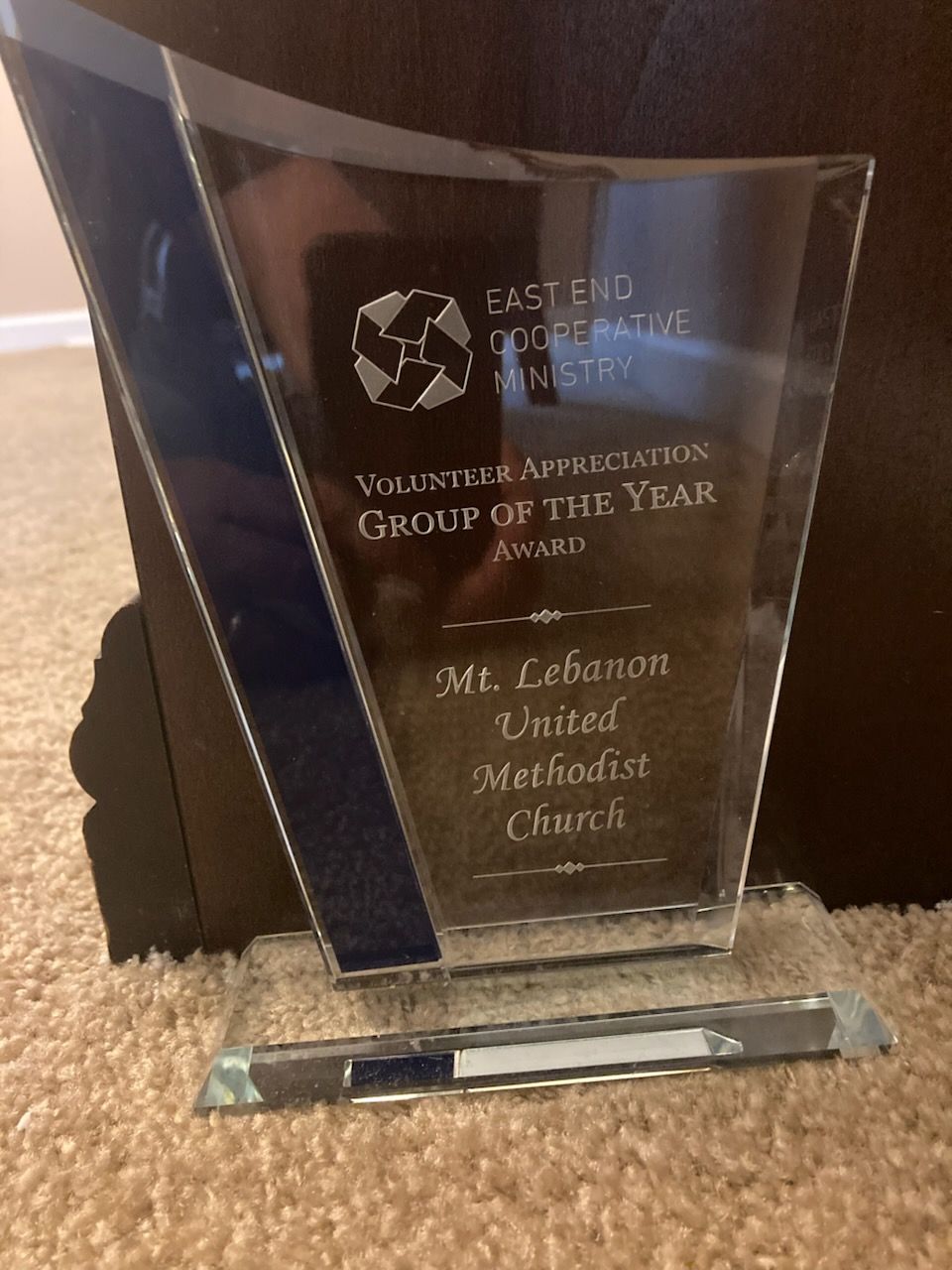
Four (4) long-standing food ministries fall under the umbrella of the Missions and Outreach Committee, most notably the Food Pantry, the Northside Lunch, the Food Lift, and the East End Cooperative Ministries Dinner. The Food Pantry (led by Liz DiPietro and Tom Wagner) has been in existence for over 20 years and provides perishable and non-perishable items twice a month to approximately sixty families (totaling 160 individuals) in our surrounding communities. The Food Pantry’s reach increased during 2025 when it added families involved with the fledging Spanish ministry that our Church is sponsoring. The Northside Lunch (led by Louanne Baily and Francie Robb) has been in existence for over 40 years and provides lunch on the first Thursday of every month to approximately 150 impoverished individuals in the North Side neighborhood. During the height of Covid, these lunches were supplemented with sanitary and protective supplies. The Food Lift (led by Monica Kao) has been in existence for over 15 years and receives/distributes perishable food items daily (year-round), not only to our Food Pantry but also to churches and social service organizations in economically challenged neighborhoods throughout the Pittsburgh area. The Food Lift also supports a monthly food distribution (third Tuesday of every month) by the Beulah Baptist Church in the Beltzhoover neighborhood. The East End Cooperative Ministries Dinner (led by Rob Spicher) has been in existence for over 30 years and provides dinner on a bi-monthly basis (4th Sunday of the “even” months) to the EECM housing/social service facility in the East Liberty neighborhood. The dinner feeds approximately fifty residents transitioning from homelessness, addictions, and incarcerations. MLUMC was recognized earlier this year as the “Volunteer Group of the Year” for our long-standing service to EECM. In addition to the folks mentioned, many other volunteers contribute their time and talents to these food ministries to ensure their success and sustainability. MLUMC is certainly making a positive impact on the lives of all whom these food ministries touch, both recipients and volunteers alike. If you would like more information on any of these food ministries or wish to help with any/all of them, please contact Rob Spicher, Missions and Outreach Committee chair, at robert.spicher@pnc.com or 412-720-4589. Volunteers are always welcome!

For the 2025-2026 program year, the Diversity, Equity and Belonging Committee (DEB) sponsored an overview of the UMC Social Principles, which were updated at the 2024 General Conference. Each month we explored a different area using a variety of methods and materials including guest speakers, large and small group discussions, book studies, and Sunday School class lessons. Many of these topics were difficult to tackle and left us with more questions than answers. So, what is next? Over and over again we discover that the Social Principles at their heart are about loving our neighbors and bringing God’s justice to an unjust world. As our VBS 2026 attendees learned, Micah 6:8 spells out God’s requirement of God’s people: “…do justice, love mercy, and walk humbly with your God.” These words are deceptively simple, but not easy to put into practice. Each part of the verse begins with an action verb: Do. Love. Walk. What should we DO when we know that justice is withheld from certain people? How do we actively LOVE those in need of physical and emotional care? How do we answer the call to WALK with our God to bring peace to a troubled world? In order to explore these questions and more, DEB’s focus for the coming program year will be Peace with Justice. Each quarter we will dive into a topic that addresses a broad group of marginalized people. Our first quarter (September, October, November) we will be Celebrating Diversity in the church, our nation, and the world. Please watch the announcements for specific activities. If you would like to help with planning for the year, please get in touch with Kim Rhoton (krhoton@mlumc.org).
"Forget the fo rmer things; do not dwell on the past. See, I am doing a new thing!" Isaiah 43:18-19a In the fall of 2025, our Church Conference established the goal of developing a new vision statement for our church during the present year, to guide our ministry in the years 2027 and beyond. Our Church Council has been working on this task during each of its monthly meetings this year. As our inspiration and starting point, we have used the new vision statement for The United Methodist Church, which was established in May of 2025, as follows: The vision states: The United Methodist Church forms disciples of Jesus Christ who, empowered by the Holy Spirit, love boldly, serve joyfully, and lead courageously in local communities and worldwide connections. This vision statement complements the Church's longstanding mission statement, inspired by Matthew 28:1-20: "The mission of The United Methodist Church is to make disciples of Jesus Christ for the transformation of the world." The vision encourages United Methodists to embody the following principles: Love Boldly: Passionately love God and, like Jesus, embrace and include people of every age, nation, race, gender and walk of life. o Inspired by Matthew 22:37-39 and John 13:34-35 Serve Joyfully: With a Christ-like heart, journey alongside the most vulnerable, offering care and compassion with joy. o Inspired by Psalm 100:1, Nehemiah 8:10, John 13:14-15 and 1 Peter 4:10 Lead Courageously: Follow Jesus’ example by resisting and dismantling all systems of evil, injustice, and oppression, striving for peace, justice and reconciliation. o Inspired by Joshua 1:9 and Ephesians 6:10 This fall, we would like to urge all members and friends of Mt. Lebanon United Methodist Church to engage with this process. I would ask you to reserve the date of Sunday, September 27th, 2026, on your calendars. Our usual Sunday schedule will be fundamentally changed on that morning to include a single service of worship, followed by a meal, and a vision-casting exercise in which your input is sorely needed. Our goal is to accomplish all of this prior to our dismissal at Noon. Would you devote a single Sunday morning to this worthwhile task? I thank you in advance for doing so. I have asked all of our Sunday School classes to stand down their operations on that day, and they have agreed to do so. Childcare will be provided to enable our younger families to attend also. Please consider this your invitation to attend! In 1908, clergyman and poet Frederick L. Hosmer penned the words for a hymn that was inspired by the early social gospel movement. His hymn was included in the 1989 United Methodist Hymnal as #555, “Forward Through the Ages.” The words of the first stanza and refrain are these: “Forward through the ages, in unbroken line, move the faithful spirits at the call divine; gifts in differing measure, hearts of one accord, manifold the service, one the sure reward.” May Hosmer’s words ring true in our hearts as we contemplate moving “Forward in Faith” this fall. I’ll see you in church! Pastor Tom Strandburg

Our final Lenten Community Fish Fry, held on April 3rd (Good Friday), was a tremendous success. Approximately eight hundred meals were served via eat-in, take-out, and limited delivery. Meal recipients included Church members as well as those from our larger church “family” (including groups that use our building, ministry and outreach partners, and neighbors from our surrounding communities). Seeing folks break bread (AND EAT FISH) together was truly a remarkable sight! For those who could not join us, the menu consisted of fried and baked fish, chicken nuggets, assorted side items, and a variety of desserts (particularly for those eating in – they had their own dessert table). Those eating in also had the opportunity to take Communion and share prayer with Pastor Tom. Many compliments were received, not only on the food but more importantly on the hospitality that went with it. Monetary donations were plentiful and helped ensure that those unable to donate were still able to get a great meal at no cost. We served approximately 2,100 meals during our 3 Lenten Fish Fries. They were truly fellowship-makers. Hockey fans know 3 goals in a game (an amazing feat) as a “hat trick.” Consider us as having scored a Fish Fry “hat trick!” And thanks again to all who helped to make it happen! Rob Spicher, Missions and Outreach Committee Ch air
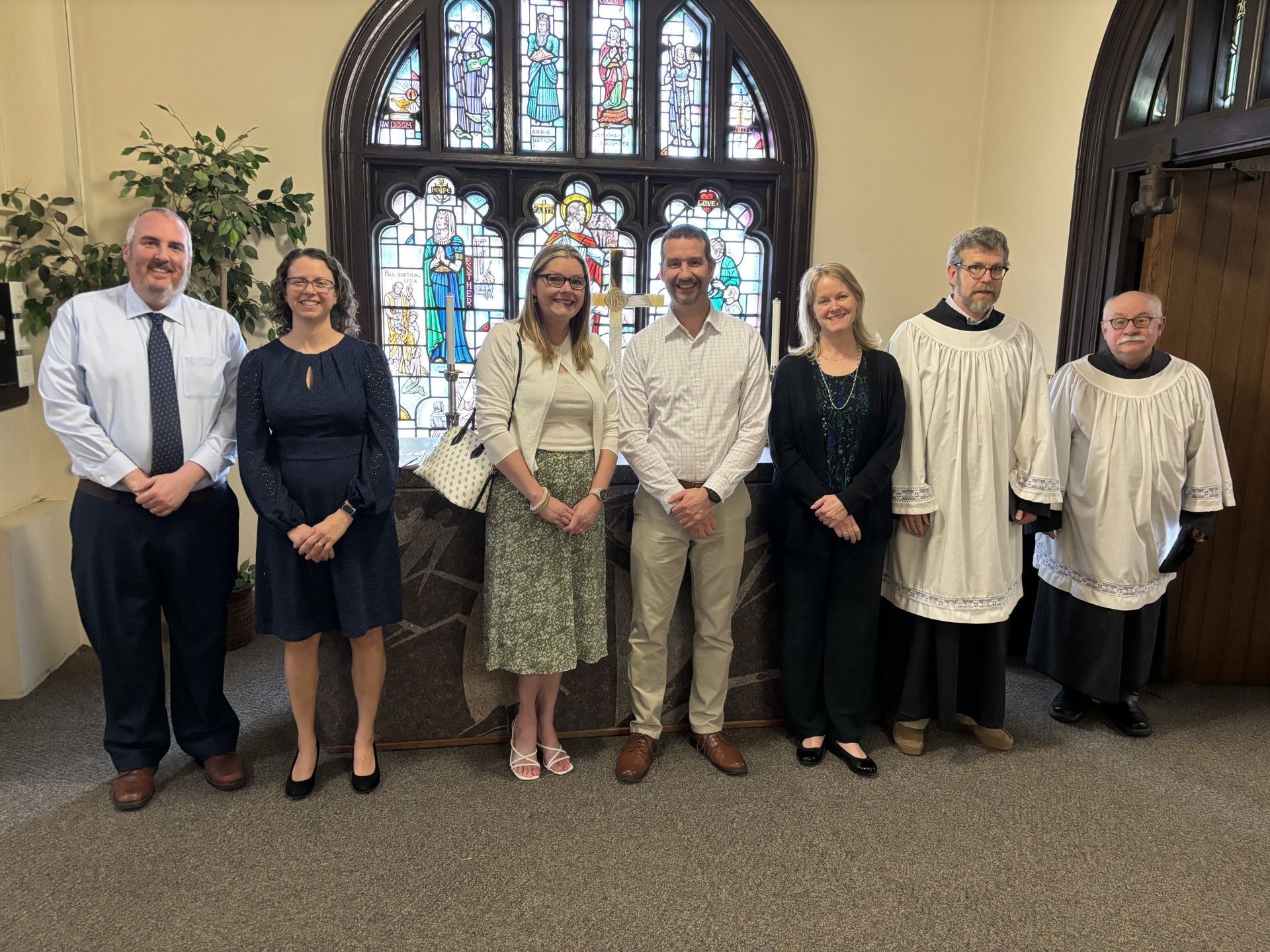
DEVON AND KATIE BABCOCK Devon has lived in Pittsburgh since high school and is a senior property manager at The Buncher Company. Katie is originally from Alabama and has lived in Pittsburgh for 9 years and currently works as the director of development for Pittsburgh Area Community Schools. They have a 19-year-old son named Lucas who is currently pursuing the Pittsburgh Institute of Aeronautics and a 1-year-old son named James whose mission in life is to point out every light and make silly noises with his mouth. Devon and Katie love doing outdoor activities such as kayaking, hiking, riding bikes on the Pittsburgh trails, and walking their two dogs, Loki the German Shepherd and Kiah the Australian Shepherd. BILL AND ELLEN CARPENTER Bill and Ellen come to Mt. Lebanon UMC from the Virginia suburbs of Washington, D.C., where they were members of Mount Olivet UMC for over 15 years. Bill, now retired from the National Archives and Records Administration, was born in Mt. Lebanon and was baptized and confirmed at Mt. Lebanon UMC before his family moved away in the 1980s. Ellen grew up in Virginia and worked at the Department of the Interior, National Science Foundation, and Department of Housing and Urban Development before their move to Pittsburgh in 2025. She now enjoys working part-time at a local yoga and wellness studio. They have been married for nearly 28 years and are happy to be here among such a welcoming community. KIRBY DILWORTH I was born, raised and educated in the western suburbs of Detroit. Baptised at 13, I became a member of the Norwayne American Baptist Church and was very active in the Chancel Choir and as a vocal soloist. I hold degrees in music and library/information science from the University of Michigan, and performed in European concert tours and opera festivals with the Men's Glee Club & Chamber Choir. Following grad school, I joined Michigan's School of Music staff before moving to Pittsburgh in 1978. I've sung in the choirs of Eastminster U.P., Congregation Rodef Shalom, and Mt. Lebanon U.P. before joining the Mt. Lebanon United Methodist Church music program in 1988. I retired in 2021 after 43 years as a reference librarian at Carnegie Library of Pittsburgh in Oakland. I first met my domestic partner of nearly 46 years, the late John Middleton, when we were performing J. S. Bach's Magnificat. John played double bass in the Civic Orchestra, and I sang (of course) in the choir. A decade later, I bought the charming red brick duplex where we lived until his passing on June 12, 2025, frequently debating the issues of taste that often consume classical musicians! All who remember John (the bearded fellow who always sat in the middle pew of the balcony) are welcome to attend his memorial service at 11 am June 12, 2026. CHRIS AND SHANA SLAYBAUGH Chris and Shana both grew up in the church, met at Messiah University, and married shortly after graduation. Shana finished grad school to become a librarian and Chris started his career as an actuary while we attended Chris' hometown church of Zion UMC in East Prospect, a little borough on the outskirts of York County. While there, we both led youth group, sang in choir, served on committees, and Chris played in the handbell choir and taught an adult Sunday school class. In 2013, we officially adopted our son Josiah after a year and a half of fostering, and Chris' job moved us to Pittsburgh, where we settled in Mt. Lebanon. Until we started attending MLUMC last summer, we were members of a local non-denominational congregation where we continued serving and leading in various ministries. We are excited to now be coming back "home" to the United Methodist Church and are looking forward to getting to know and serve with you all.

“From Him the whole body, joined and held together by every supporting ligament, grows and builds itself up in love, as each part does its work.” Ephesians 4:16 (NIV) People sometimes ask me what is my “favorite passage in the Bible.” I actually have many favorites. My favorite passage concerning the church is Ephesians 4:16, printed above. The Apostle Paul uses the image of a body because it’s impossible to miss the point: a body only thrives when its parts are connected and functioning. A hand can’t flourish apart from the arm. A heart can’t beat without the support of the lungs. And a church can’t grow in Christ if its members are disconnected or passive. Christ is the source — “from Him the whole body…” But we are the structure — “joined and held together by every supporting ligament.” And we are also the builders — the body “builds itself up in love.” That’s the beautiful tension of Christian community: Christ empowers, but we participate. Every Part Matters Paul doesn’t say some parts. He doesn’t say the gifted parts or the visible parts. He says each part does its work. That means: · The quiet encourager matters. · The behind‑the‑scenes servant matters. · The prayer warrior matters. · The new believer matters. · The tired parent matters. · The elder saint matters. In Christ’s design, there is no such thing as an unnecessary Christian. If you’re part of the body, you’re essential to its health. Love Is the Atmosphere of Growth Paul could have said the body grows through strategy, programs, or leadership structures. Instead, he says it grows in love. · Love is what makes the church more than an organization. · Love is what keeps us connected when personalities clash. · Love is what motivates service when no one notices. · Love is what turns a group of people into a family. Without love, the body becomes rigid and lifeless. With love, it becomes flexible, strong, and fruitful. A Call for Our Church Today Ephesians 4:16 invites us to ask: What part has Christ given me to play in this body? Not out of guilt, but out of gratitude. Not out of pressure, but out of purpose. · Maybe your part is prayer. · Maybe it’s hospitality. · Maybe it’s teaching, giving, listening, encouraging, or simply showing up faithfully. · Whatever it is, the body needs it. Christ designed it that way. When each of us brings our part — however small it may seem — Christ knits it all together into something far greater than the sum of its pieces. Closing Thought A church doesn’t grow because a few people do a lot. A church grows because everyone does their part in love. Paul’s message in Ephesians 4:16 is simple and demanding at the same time: the church only becomes what Christ intends when every person contributes their God‑given part. Growth isn’t accidental. It’s relational, intentional, and rooted in love. May we be a body that is connected, committed, and continually built up in the love of Christ! Pastor Tom Strandburg
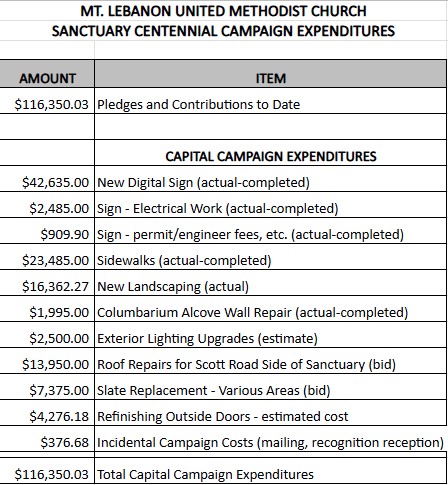
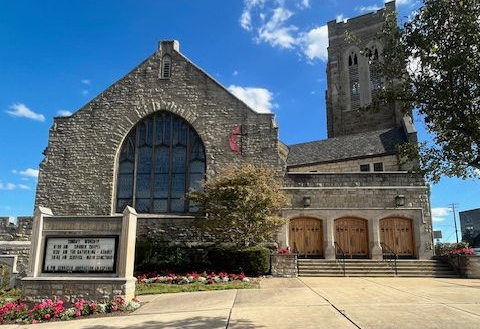
Work on our Capital Campaign projects was deferred during the winter months. When the weather warms, work on the roof and lighting of the front of our church will commence. In addition, we have decided to use the additional funds that were raised to refurbish as many outside doors as funding allows. The first doors to be refurbished are the ones at the entrance to Asbury Center. The doors on Scott Road also need attention so we hope we will have enough funds to complete that project. Finally, we are anxious to see our new landscaping in full bloom this spring. It is interesting to note that our new sign has caught the attention of another Pittsburgh church, and they are interested in installing a similar sign.
The body content of your post goes here. To edit this text, click on it and delete this default text and start typing your own or paste your own from a different source.

As we approach the season of Lent—a time of repentance, reflection, and renewal—Isaiah’s ancient words speak with startling clarity: “Surely he has borne our infirmities and carried our diseases… he was wounded for our transgressions, crushed for our iniquities; upon him was the punishment that made us whole, and by his bruises we are healed.” These verses, written centuries before the birth of Christ, invite us to see the heart of the gospel: the self-giving love of God revealed in the suffering servant. Isaiah paints a picture not of a triumphant conqueror, but of one who enters fully into the pain, sin, and brokenness of humanity—not to condemn, but to redeem. During Lent, we are reminded that the cross is not an accident of history; it is the deliberate path of love. Jesus does not stand at a safe distance from our struggles. He steps into them, bearing the weight of our failures, our griefs, and even the wounds we inflict on one another. In doing so, he transforms suffering into the very means of our healing. For the United Methodist tradition, which emphasizes both personal holiness and social holiness, this passage calls us to two responses: Personal repentance —acknowledging the ways we have turned from God and receiving the grace Christ offers. Compassionate action —joining Christ in bearing the burdens of others, especially the marginalized, the hurting, and the forgotten. Lent is not merely about giving something up; it is about taking something on—the posture of Christlike love that Isaiah describes. As we journey toward Good Friday and Easter, may we remember that the One who was “wounded for our transgressions” is also the One who makes us whole. Here is a question for you to reflect upon: As you enter this Lenten season, what burden will you allow Christ to carry for you—and whose burden will you help carry in his name?
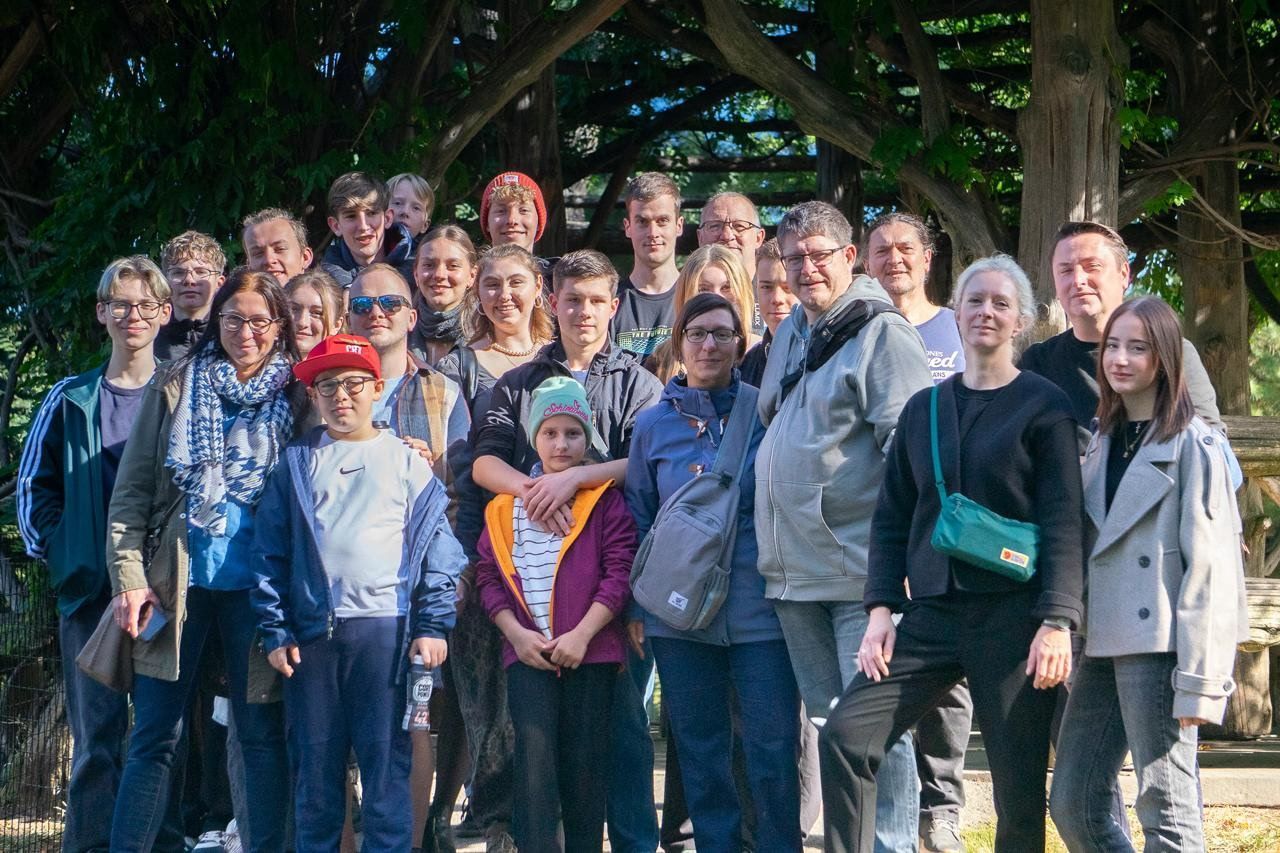
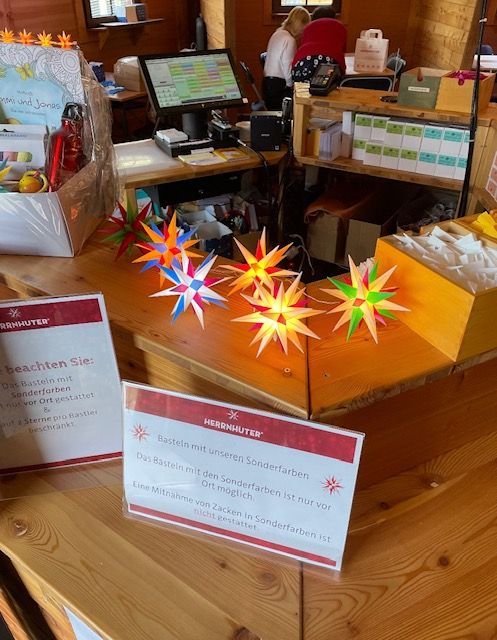
Twenty-five Zwickauers, ranging in age from 10 - 55, visited us from October 5 - 15. This partnership with the Friedenskirche (Peace Church) was begun at the suggestion of Rev. Jeff Miller in 1995. This year’s visit was filled with mission work, cultural events, and common worship events. Language does not seem to matter, but our common beliefs and values do matter! Lori and Deanna would also like to thank everyone who has supported the Zwickau partnership and the Zwickau Committee work through our Schnitzel lunches, our election day bake sales, and, of course, our Mission/Outreach donations. Because of this help we already have a fund begun for our 2027 Zwickau trip. Planning will begin in 2026. Consider joining up! Questions? Contact Lori Barr (lbarr@mlumc.org), or Deanna Baird (fraubaird@aol.com)